Addmotor Announces Consumer-Grade Wearable AI-Powered Exoskeleton Cybergen Series EL MONTE, CA, Nov. 4, 2026 – Addmotor today announced the U.S. availability of its flagship wearable ...

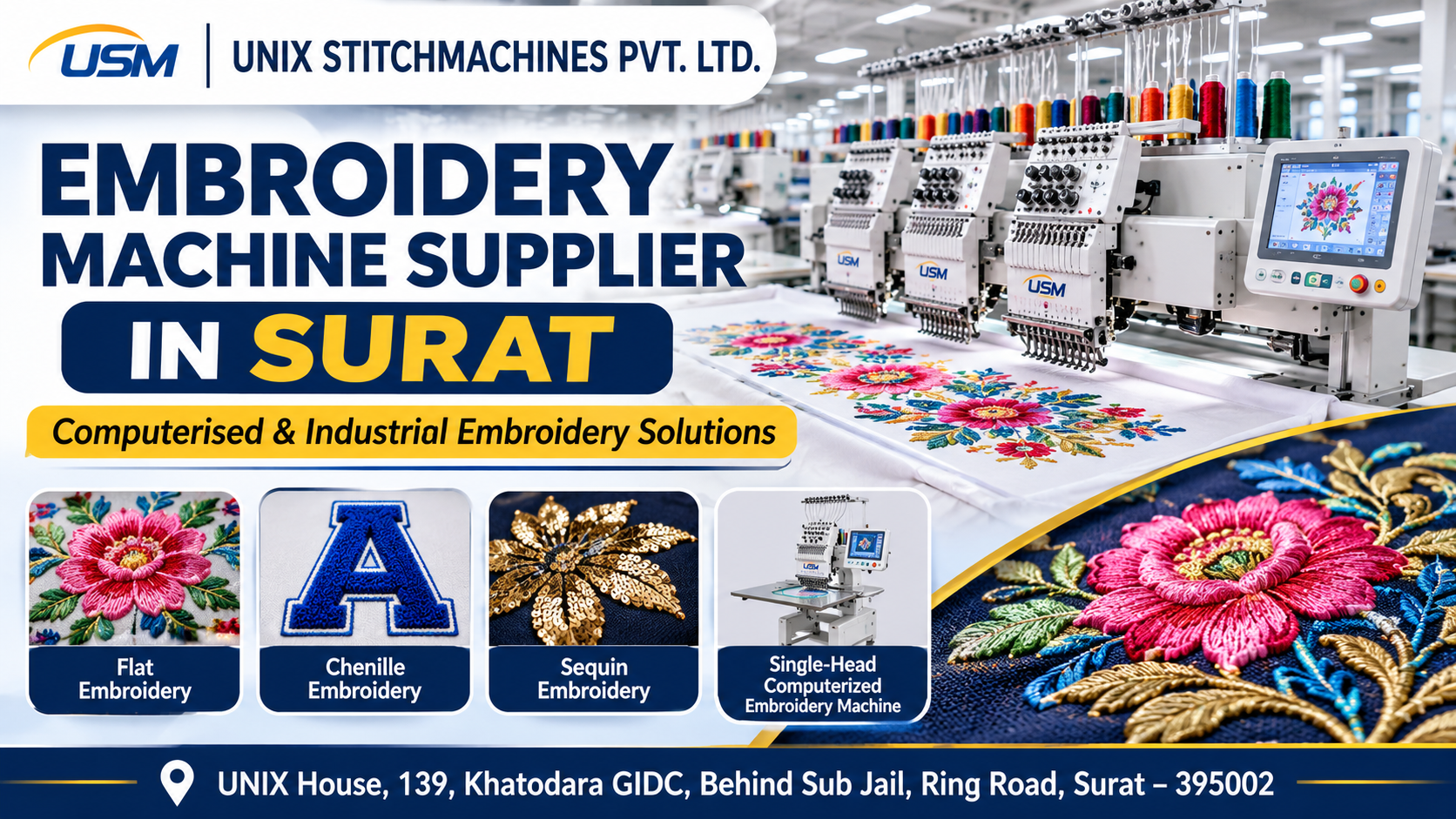
A flat embroidery machine is built to stitch designs onto flat fabric surfaces with controlled movement and repeatable results. This matters when you need consistent placement for logos, monograms, and decorative patterns across many garments. Instead of Flat Embroidery Machine in Surat relying on manual positioning, the machine follows programmed guidance and helps standardize stitch density and outline accuracy. For many workshops in Surat, this means faster turnaround and fewer quality variations between batches.
In a commercial setting, the most valuable feature is reliability under ongoing workloads. Flat embroidery setups are commonly used for apparel panels, fabric pieces, and items that can be kept steady while the needle works. When the machine is properly configured, you can achieve clean edges, stable fills, and legible lettering that customers recognize instantly. A practical plan starts by mapping your typical product formats—like shirt fronts, placket areas, tote panels, or badge-sized logos—so the machine workflow fits your production line.
Before choosing equipment, define what your business actually produces most often. Small embroidery workshops may start with single-head capability for sample work, custom requests, and smaller batch runs. Multi-head options can speed up output when you handle uniform production or large corporate orders that require repeated logo placement. If your designs change frequently, computerized programming can reduce setup time and help you reproduce artwork accurately across runs.
Fabric compatibility is a make-or-break factor for embroidery results. Cotton, polyester blends, denim, and textured weaves all behave differently under tension and needle penetration. For thin fabrics, careful stabilization and correct needle selection help prevent puckering or distortion. For thicker fabrics, the machine must support appropriate thread tension, stitch control, and reliable feeding to avoid skipped stitches. Create a short fabric list with your top five materials, then discuss how each one will be stitched—because the right settings depend on your inputs.
Also consider how you will handle design complexity. Simple borders and fills are easier to stabilize, while dense or multi-color artworks need consistent tension management. Lettering requires sharp control over stitch spacing and direction changes to maintain legibility. If you often embroider brand marks with fine detail, prioritize a machine that supports precise programming and stable head behavior. The goal is to reduce rework and chargebacks by delivering the same visual quality every time.
Use a practical buying checklist rather than focusing only on cost. Start with technical fit: confirm the machine configuration supports your planned production size, stitch range, and design style. Ask about the supported embroidery formats, the ease of loading digitized artwork, and how quickly operators can switch between designs. A machine that is difficult to program or requires complex manual steps can slow your line even if the hardware appears powerful.
Next, evaluate stitching quality with real test pieces, not just sample images. Request trial embroidery on your fabric types and with your thread brands if possible. Inspect edge sharpness, fill smoothness, and whether the back side shows excessive pulling or thread loops. Measure consistency across multiple repeats, because some machines perform well on the first run but degrade in repeat accuracy as production continues. This is why trial testing should include at least a small production-style batch, not a single quick demonstration.
Stability and maintenance planning also belong on the checklist. Look for features and guidance related to cleaning, lubrication, and regular inspection points. Confirm spare parts availability for needles, presser components, drive parts, and tension-related elements. When service support is responsive, downtime becomes shorter and your output remains steady. For a business handling client deadlines, these operational details can matter as much as speed.
Even with the right machine, results depend on process discipline. Prepare fabric handling first: ensure items are mounted flat, aligned correctly, and stabilized for the stitch type you use. Use the correct stabilizing material for each fabric category, because insufficient support leads to wrinkles and uneven fills. Keep thread systems organized to reduce tangling, and use thread suitable for the fabric thickness and expected wear. When your setup is consistent, the machine can reproduce designs with fewer surprises.
Set up a simple test-and-adjust routine for every new design or fabric. Run a short sample to verify tension balance, stitch density, and alignment before moving into bulk work. For lettering, check baseline positioning and the spacing between characters to prevent visual distortions. For large fills, confirm that the fabric does not shift during high-density stitching. This routine prevents wasted production time and protects your reputation with clients who expect clean, professional finishing.
Operator training is another practical lever. Train staff not only on machine buttons, but on how to interpret common issues like thread breaks, skipped stitches, and tension imbalance. Teach operators how to adjust settings methodically—changing one variable at a time—so they can isolate the cause of a defect quickly. Keep a basic log of successful settings by fabric and design type, such as “cotton twill with medium-density fill” or “denim with dense border.” Over time, this creates a repeatable production playbook that improves efficiency.
A flat embroidery machine can be a strong investment when your business needs consistent decorative stitching, reliable logo placement, and efficient batch production. By aligning machine selection with your order size, fabric types, and design complexity, you reduce defects and minimize rework. A practical approach also includes evaluating stitching quality through real test runs, confirming programming and supported formats, and planning for maintenance and spare parts. If you are exploring production-ready embroidery equipment, consider how a supplier like Unix Stitch Machines Pvt Ltd can support your requirements with suitable solutions for commercial use. Before finalizing a purchase, compare configurations, confirm performance expectations on your fabrics, and ensure technical support is available for ongoing operations. With the right machine and a disciplined workflow, you can deliver professional embroidery that helps your clients trust your brand and repeat orders.

 How to create new field